
CED Study Center for Participants
Research and care for your health
We conduct clinical studies on chronic inflammatory bowel diseases (IBD) such as Crohn’s disease and ulcerative colitis – scientifically sound, responsibly implemented, and with personal medical support.
In collaboration with qualified research partners and under review by independent ethics committees.
Our Specialization
The CED Study Center Karlshorst is affiliated with the Gastroenterology Berlin practice led by Dr. Brunk. We specialize in conducting clinical studies for renowned pharmaceutical research partners in the field of chronic inflammatory bowel diseases (IBD).
Clinical studies enable participation in scientifically tested, but not yet generally available, treatment approaches – always under strictly controlled conditions, with clear procedures and careful medical supervision.
Our work combines scientific precision with personal attention.
Medical Expertise – Our Team
Our team includes two experienced gastroenterologists as well as a dedicated study coordinator and qualified study nurses.
We have many years of experience in the care of patients with Crohn’s disease, ulcerative colitis and other chronic inflammatory bowel diseases.
Through this expertise and close cooperation within the team, clinical studies can be carried out in a structured, transparent and patient-oriented manner – with dedicated contact persons and personal support.
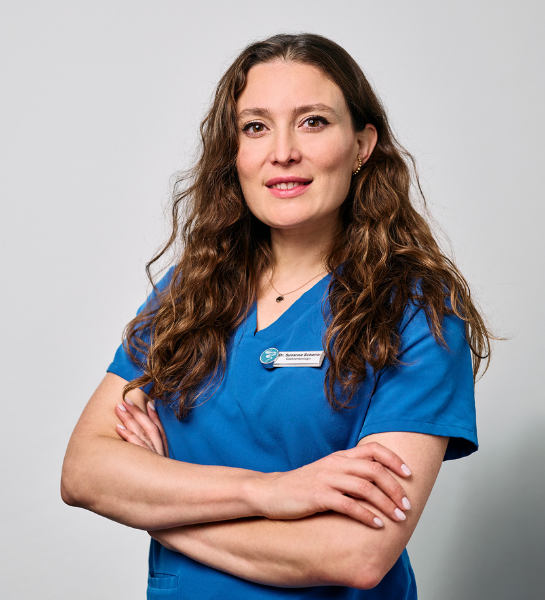
Dr. med. Susanna Scharrer
Specialist in internal medicine and gastroenterology
Focus: Chronic inflammatory bowel diseases, interventional endoscopy and sonography

Dr. med. Thomas Brunk
Specialist in internal medicine and gastroenterology
Hematology and internal oncology
Focus: Gastrointestinal oncology

Viola Heller
Study Assistant

Richard Juma Otwo
Study Nurse

Nadine Petco
Study Coordinator
Modern equipment
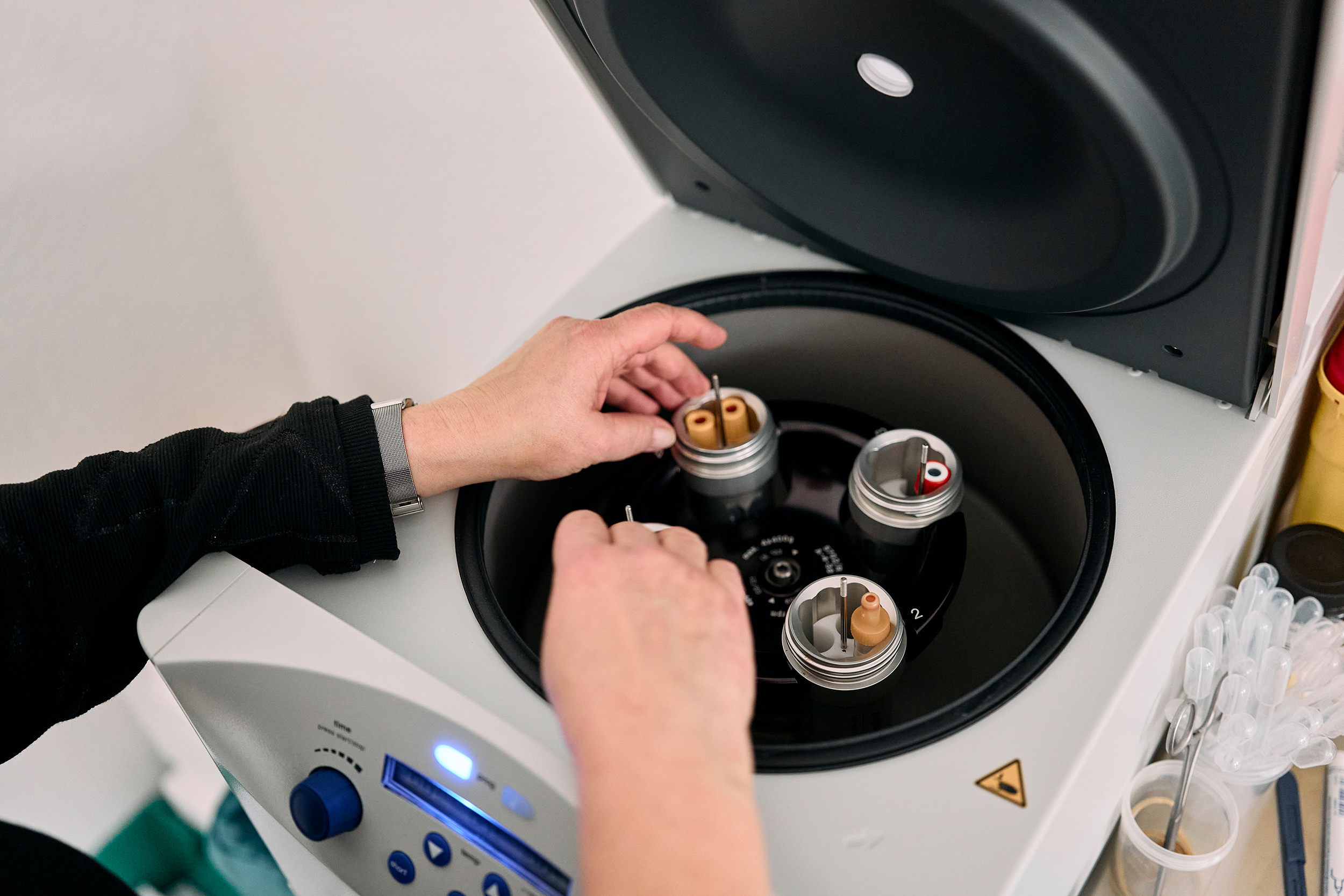
Our gastroenterological practice offers modern diagnostic equipment and high-resolution devices that enable precise and safe medical examinations.
The affiliated study center additionally creates a quiet and concentrated environment, ideal for examinations in the context of clinical studies. This allows study participants to be cared for away from everyday practice in a protected and pleasant environment.




Who our studies are suitable for
We conduct clinical studies for people with moderate to severe chronic inflammatory bowel diseases. Both early and advanced stages of the disease can be considered.
Whether participation is possible always depends on the respective medical inclusion criteria of the study. These will be explained in detail in the information meeting.
Quality and safety
We meet all national and international standards of clinical research.
- Implementation according to Good Clinical Practice (GCP)
- Review and approval by independent ethics committees
- Regular internal and external quality controls
- Complete documentation of all processes
Your safety is our top priority. We place particular emphasis on:
- voluntary, informed participation
- transparent information
- strictly confidential processing of your data in accordance with GDPR
- respectful and patient-oriented care
In collaboration with qualified research partners and under review by independent ethics committees.
How a study works with us

1. Kontaktaufnahme
Sie melden sich unverbindlich über unser Formular oder telefonisch. Wir prüfen, welche Studien infrage kommen könnten.

2. Informationsgespräch
Sie erhalten verständliche Informationen zu Zielen, Abläufen, Untersuchungen und möglichen Belastungen. Danach entscheiden Sie in Ruhe.

3. Voruntersuchung
Es wird geprüft, ob die Teilnahme medizinisch möglich ist, z. B. anhand von Bluttests, Fragebögen oder körperlichen Untersuchungen.

4. Teilnahme und Betreuung
Regelmäßige Termine im Studienzentrum. Alle Schritte erfolgen unter ärztlicher Überwachung. Eine angemessene Aufwandsentschädigung kann vorgesehen sein.

5. Abschlussgespräch
Besprechung der Untersuchungsergebnisse und Abschlussdokumentation.
Current studies
Crohn’s disease: SAR441566 study
Worum geht es in dieser Studie? Dies ist eine minimalinterventionelle, offene und randomisierte Studie, in der zwei in Deutschland zugelassene Therapien bei Erwachsenen mit neu diagnostizierter mittelschwerer bis schwerer Colitis ulcerosa verglichen werden: die...
Crohn’s disease: SAR441566 study
Worum geht es in dieser Studie? Dies ist eine Phase-3-Studie, in der die Wirksamkeit und Sicherheit eines neuen Medikaments namens JNJ-78934804 bei Erwachsenen mit mittelschwerem bis schwerem Morbus Crohn untersucht wird. JNJ-78934804 kombiniert zwei bereits...
Crohn’s disease: SAR441566 study
Worum geht es in dieser Studie? Dies ist eine Phase-3-Studie, in der die Wirksamkeit und Sicherheit eines neuen Medikaments namens JNJ-78934804 bei Erwachsenen mit mittelschwerem bis schwerem Morbus Crohn untersucht wird. JNJ-78934804 kombiniert zwei bereits...
Crohn’s disease: SAR441566 study
What is this study about? This is a Phase 2 study examining the efficacy and safety of a new drug called SAR441566 in adults with moderate to severe Crohn's disease. Various dosages of SAR441566 are compared to a placebo (sham drug) to determine which works best. Who...
Ulcerative colitis: MIRACLE study
Worum geht es in dieser Studie? Die MIRACLE-Studie vergleicht zwei Behandlungsansätze für Patient:innen, die in den letzten 12 Monaten neu mit mittelschwerer bis schwerer Colitis ulcerosa diagnostiziert wurden: Frühzeitige Behandlung mit Mirikizumab (ein Biologikum)...
FAQs
What is Crohn's disease?
Crohn’s disease is a chronic inflammation of the digestive tract, which usually occurs in episodes. The small and large intestines are often affected, but theoretically any section of the digestive tract can be involved.
Typical symptoms may include:
- recurrent diarrhea
- abdominal pain
- fatigue and exhaustion
- weight loss
- fever in acute phases
The course is individually different: Some people have occasional episodes, while others experience symptoms more often.
What is ulcerative colitis?
Ulcerative colitis is a chronic inflammatory disease of the large intestine. It also usually occurs in episodes, i.e. with phases of severe symptoms and phases in which there are few or no symptoms.
Typical symptoms may include:
- bloody-mucous diarrhea
- abdominal cramps, often on the left side
- weight loss
- frequent urge to defecate
Ulcerative colitis is not curable, but can be treated with medication and – in certain disease courses – also with surgical measures.
What are chronic inflammatory bowel diseases (IBD)?
Chronic inflammatory bowel diseases (IBD) primarily include Crohn’s disease and ulcerative colitis.
Both diseases:
- are long-term,
- usually occur in episodes,
- affect several hundred thousand people in Germany,
- and can greatly affect daily life.
IBD often begins in young adulthood, but can occur at any age.
What treatment goals are pursued with IBD?
Treatment can include various building blocks, for example:
- Medications
- Nutritional recommendations
- surgery for certain courses
Important treatment goals include:
- Relief of symptoms
- Reduction of inflammation
- Avoidance of complications
- Improvement of quality of life
- extended phases with few symptoms
Medical treatment is often based on the Treat-to-Target concept:
The therapy is adjusted until certain, clearly defined goals are achieved as far as possible.
Which drugs are used for IBD?
Depending on the disease and course, various drug groups can be used:
- Aminosalicylates
- Corticosteroid preparations
- Immunosuppressants
- Biologics
- Small Molecules
These drugs affect the immune system and inflammation in different ways.
As with all medicines, side effects can occur, for example:
- Infections
- Blood count changes
- Liver dysfunction
- Osteoporosis
- Skin reactions
- Metabolic changes
Which therapy is suitable is assessed individually by a doctor.
Why do people participate in an IBD study?
There can be various reasons for participating in a study:
- to contribute to the further development of medical research
- to support new scientific findings on IBD
- to be medically examined in a structured and closely monitored manner
- because there is an interest in new, scientifically tested approaches
Important:
Participation in a study is always voluntary.
A personal health benefit cannot be guaranteed. Close medical supervision takes place within the framework of the respective study protocol.
What does a principal investigator do?
The principal investigator bears the overall medical responsibility for the clinical study. The tasks include:
- Information for study participants
- Checking whether participation is possible
- medical examination and monitoring during the study
- Assessment of complaints or changes
- Compliance with all legal and scientific requirements
The principal investigator ensures that the study is conducted safely, in accordance with the rules and in a comprehensible manner.
What do study nurses and study coordinators do?
Study Nurses:
- accompany study participants during all appointments
- carry out examinations according to the study plan
- document data
- are the first point of contact for organizational and practical questions
Study coordination:
- plans and organizes the entire study process
- ensures compliance with the study protocol
- coordinates processes between the principal investigator team, sponsor, laboratories and authorities
- ensures complete documentation
Both roles are central to a structured course of the study.
Is there compensation for expenses?
Depending on the study, reasonable compensation for time or travel expenses may be provided.
Whether and to what extent this is the case will be explained in the information meeting for the respective study.

